New Delhi: Farming on the Moon may no longer be just a science-fiction idea. Scientists have successfully grown chickpeas in lunar-like soil, marking an important step toward developing agricultural systems for future long-duration space missions.
Researchers at Texas A&M University successfully cultivated a variety of chickpea known as ‘Myles’ inside a specially controlled climate chamber. For the experiment, they used lunar-like soil prepared by a company in Florida. The material resembles the regolith found on the Moon and is similar in composition to lunar soil collected during NASA’s Apollo missions.
Chickpeas Successfully Grown with 75% Lunar Soil
During the experiment, researchers mixed the lunar-like soil with earthworm compost. The chickpea seeds were also coated with a special beneficial fungus designed to help the plants absorb essential nutrients.
The researchers found that chickpeas were able to grow successfully when the soil mixture contained up to 75% lunar regolith. As the proportion of lunar soil increased, however, crop productivity declined. Despite this, the chickpeas that developed were of normal size.
Scientists also planted chickpea seeds in 100% lunar-like soil. Under those conditions, the plants failed to develop properly. They produced neither flowers nor seeds and eventually dried up and died prematurely.
Important Step for Future Space Missions
The United States, China and other countries are working on plans to send astronauts to the Moon and establish facilities capable of supporting longer stays.
One of the major challenges for such missions will be providing sufficient food. Transporting food from Earth by spacecraft is expensive and limited by the weight and storage capacity of spacecraft.
Researchers therefore believe that learning how to grow food on the Moon or Mars could become essential for future missions.
Plants could provide not only food but also oxygen, potentially supporting life-support systems for astronauts.
Chickpeas Have Not Been Eaten Yet
Despite successfully growing the chickpeas, scientists have not yet considered them safe for human consumption.
Researchers are currently testing the plants for the presence of metals and other substances. Lunar soil contains significant amounts of elements such as aluminium and iron.
While iron is an important nutrient for plants, excessive aluminium can be toxic. Scientists want to establish that chickpeas grown in lunar-like soil are completely safe and nutritious before allowing them to be consumed.
The research team expects the safety-related findings to become available by the end of this year.
Beneficial Fungus Played a Key Role
The beneficial fungus applied to the chickpea seeds played an important role in the experiment. According to the researchers, the microorganism helped the plants absorb essential nutrients from the soil and limited the uptake of potentially harmful metals.
Lunar regolith is very different from ordinary soil on Earth. It consists largely of fine rock and glass-like particles created by impacts from meteorites over billions of years.
The experiment suggests that biological materials such as beneficial microorganisms, combined with organic fertilisers and controlled growing conditions, could potentially make lunar soil more suitable for agriculture.
‘Chickpeas Growing on the Moon’ Became a Symbol of the Experiment
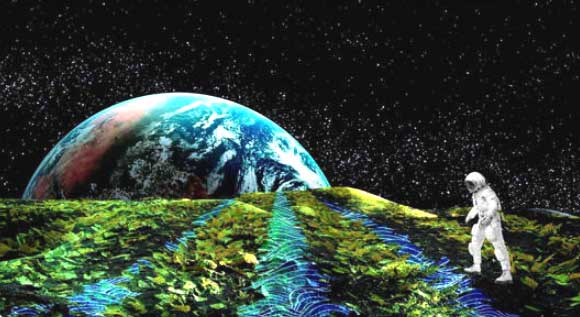
The researchers also created an enthusiastic atmosphere inside the laboratory during the experiment. Researcher Jessica Atkin reportedly played Moon-themed songs, including Bad Moon Rising, to encourage the plants and displayed an image representing chickpeas growing on the Moon.
Although the experiment is still at an early stage, scientists consider it a meaningful step toward understanding how crops could eventually be cultivated beyond Earth.
The successful growth of chickpeas in lunar-like soil does not yet mean that farming on the Moon is ready for practical use. However, the research provides evidence that with the right combination of organic matter, beneficial microorganisms and controlled environmental conditions, growing food beyond Earth could become a realistic possibility in the future.